

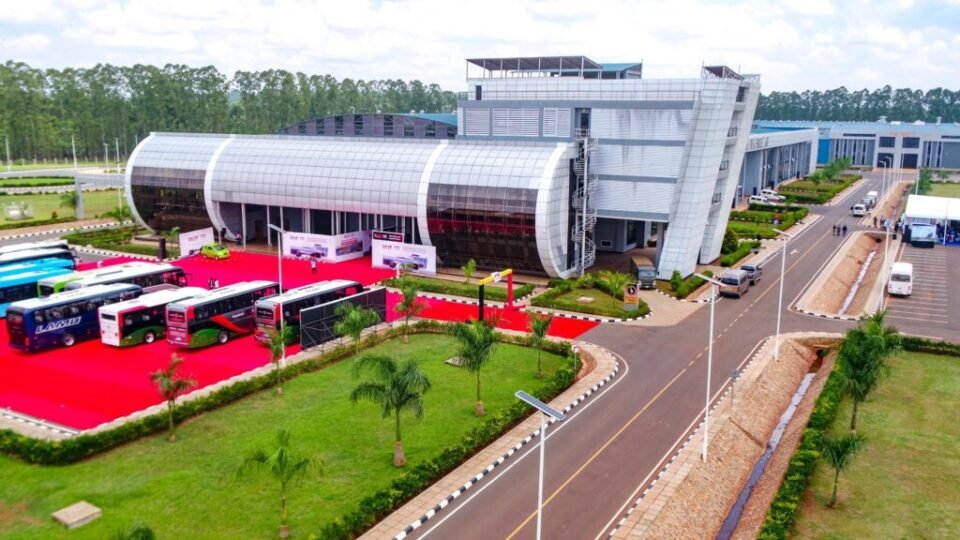
Kampala — Uganda has officially launched its first large-scale electric vehicle (EV) production plant, marking a major milestone in the country’s push toward industrialization and clean-energy mobility. The plant, developed under the Kiira Motors Corporation (KMC) initiative in partnership with local and international engineers, is located at the Jinja Industrial and Business Park and is expected to significantly boost the nation’s automotive manufacturing capacity.
Government officials, led by President Yoweri Museveni, presided over the unveiling ceremony, describing the plant as a strategic investment that positions Uganda as a regional leader in sustainable transport technologies. The facility will produce electric buses, sedans, and logistics vehicles tailored for both domestic and East African markets.
According to KMC executives, the plant has an initial production capacity of 5,000 vehicles per year, with plans to scale up as demand increases. It is equipped with modern assembly lines, battery integration units, testing tracks, and a research centre intended to support innovation in battery technology and charging systems. Officials noted that a significant portion of the components will gradually be sourced locally, supporting Uganda’s manufacturing and supply chain ecosystem.
The project is expected to create thousands of direct and indirect jobs, ranging from engineering and mechanics to marketing, maintenance, and infrastructure development. Government has committed to expanding charging stations along major highways and within urban centres to support the adoption of electric vehicles across the country.
Industry analysts say the launch comes at a time when African countries are seeking alternatives to fossil-fuel dependence, with rising fuel prices and environmental concerns pushing both private and public institutions toward clean transportation options. Uganda’s entry into electric vehicle manufacturing places it alongside countries like South Africa and Kenya, which have already made notable strides in the EV sector.
Despite the enthusiasm, experts have urged the government to ensure affordable electricity tariffs and stable power supply to fully support the industry. Others have highlighted the need for policies that encourage EV adoption, including tax incentives, reduced import duties on components, and improved financing options for local buyers.
The unveiling marks a significant step in Uganda’s long-term vision to transition into a modern, innovation-driven economy, with electric mobility at the centre of future transport planning.
